
What detox means
Detoxification is the process of managing withdrawal as a substance leaves the body. Medical withdrawal management may include assessment, monitoring and medication. Detox alone does not address every part of addiction; continuing treatment and support matter.
When medical assessment matters
Withdrawal risk depends on the substance, pattern of use, other medications and your health. A qualified clinician should assess whether outpatient or inpatient withdrawal management is appropriate. Do not use this page to plan a home detox.
- Alcohol and benzodiazepine withdrawal can be dangerous. Seek medical advice before abruptly stopping regular use.
- Opioid withdrawal can be distressing. A clinician can discuss withdrawal support and medications for opioid use disorder.
- Fentanyl and other opioids carry overdose risks. Reduced tolerance after a period without use can increase overdose risk.
- Using multiple substances can complicate withdrawal and care. Tell the clinician about all substances, prescriptions and supplements.
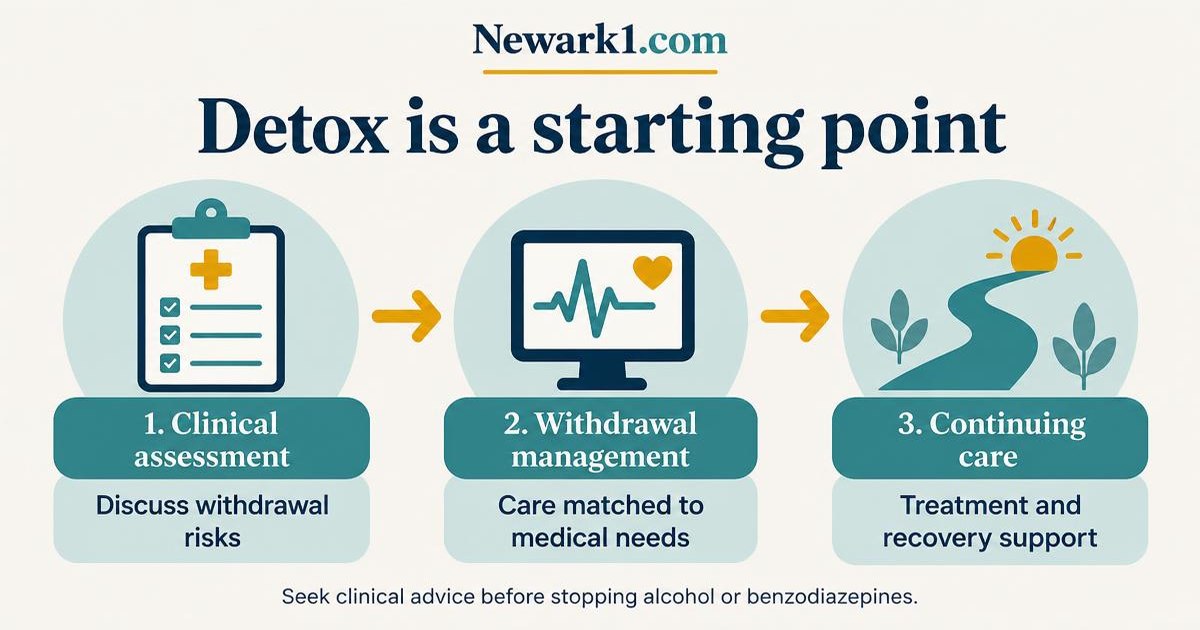
Detox is a starting point
- Clinical assessment: discuss withdrawal risks.
- Withdrawal management: care matched to medical needs.
- Continuing care: treatment and recovery support.
- Seek clinical advice before stopping alcohol or benzodiazepines.
Questions to ask a detox program
Ask the admissions team about clinical capabilities, eligibility and the plan after withdrawal management.
- Is the program licensed to provide the services I need?
- Who evaluates withdrawal risk, and is medical monitoring available?
- How are existing prescriptions and co-occurring health conditions handled?
- What costs and insurance approvals apply?
- How will you connect me with ongoing treatment?
What to expect before admission
An admissions team may ask about recent substance use, health history, medications and insurance. The provider determines the level of care and whether it can safely meet your needs. Ask for an approved packing list, transportation plan and a clear explanation of costs before arriving.
Finding care from Newark or Essex County
Use official New Jersey resources to locate programs, then confirm services, availability, licensing and payment directly. A Newark address does not guarantee that a program offers medical withdrawal management. The appropriate option may be outside the city.

External local resource
Newark Detox Resource Center
Explore Newark.rehab as an additional information resource. This is a separate website and phone number, not Newark1.com. A listing here does not establish affiliation or verify clinical services, licensing, hours or availability. Confirm details directly.
On a phone, tap “Open in Google Maps” for directions in the Maps app.
Frequently asked questions
Is detox the same as addiction treatment?
No. Withdrawal management is one step. Ongoing medication, counseling and recovery support may be part of a continuing care plan.
Can Newark1.com admit someone to detox?
No. Newark1.com provides information and non-emergency guidance. A licensed provider handles clinical assessment and admission.
How long does detox take?
The length varies by substance, health needs and the provider’s assessment. Ask the clinical team rather than relying on a fixed timeline.
Sources & further reading
Newark1.com is an independent informational resource, not a treatment center, detox, hospital, emergency service, or government agency. Information is educational and is not medical or legal advice.