
What families can do first
Start with immediate safety, then gather information and ask for help. Talk when everyone is as calm as possible. Describe what you have noticed and ask what support the person would find useful. Avoid trying to diagnose them yourself.
Boundaries, safety and support
A boundary describes what you can safely do, not an attempt to control another person. Consider limits around money, driving, behavior in your home and caregiving. If there is a risk of violence, get professional safety guidance rather than confronting someone alone.
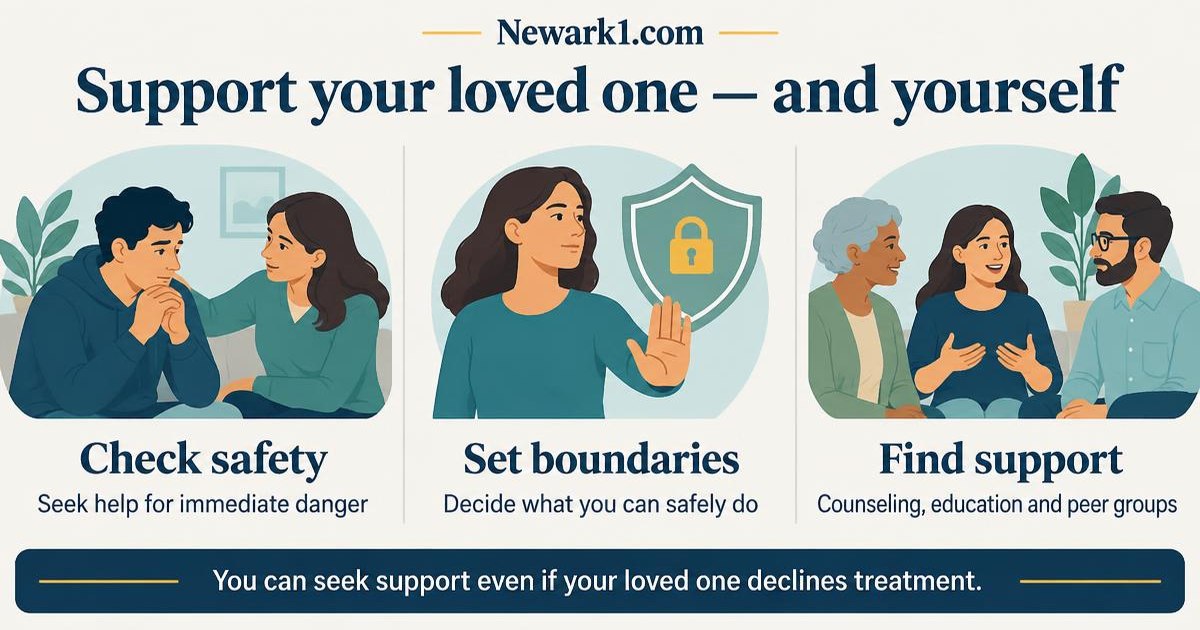
Support your loved one — and yourself
- Check safety: seek help for immediate danger.
- Set boundaries: decide what you can safely do.
- Find support: counseling, education and peer groups.
- You can seek support even if your loved one declines treatment.
Help without taking over
Practical support may include helping locate care or arranging an agreed ride. Avoid using shame-based labels. You do not have to provide money, conceal dangerous behavior or accept unsafe situations to show care.
Prepare for treatment entry
Ask the provider what information and documents are needed. With the person’s permission, gather medication lists, relevant health history, insurance information and contact details. Confirm costs and transportation. Providers may need consent before sharing information with family.
If someone refuses help
You can keep a respectful offer of support open while maintaining safety boundaries. Seek support for yourself even if your loved one is not ready. Parents, spouses, siblings and adult children may each have different needs; peer groups, counseling and family education can help you explore them.

Frequently asked questions
Can I get support if my loved one refuses treatment?
Yes. Family members can look for counseling, family education and peer support for their own needs.
Can a program tell me about my loved one’s treatment?
Privacy rules and consent affect what can be shared. Ask the program to explain its communication and authorization policies.
What if the situation becomes unsafe?
Call 911 for immediate danger, violence, overdose or a medical emergency. For suicide or mental health crisis support, call or text 988.
Sources & further reading
Newark1.com is an independent informational resource, not a treatment center, detox, hospital, emergency service, or government agency. Information is educational and is not medical or legal advice.