
Key takeaways
Not having insurance does not rule out treatment in New Jersey. Check whether you qualify for NJ FamilyCare, ask ReachNJ about state-funded programs, and look for community health centers with income-based fees. If you pay directly, get an itemized written estimate and avoid signing financing under pressure.

Lack of insurance is common—and there are paths
Many people seeking addiction treatment do not have active insurance. Publicly funded programs, coverage enrollment and payment arrangements may still make care possible. Do not delay urgent medical needs because of cost concerns; call 911 in an emergency.
Check whether you can get covered
You may qualify for NJ FamilyCare, New Jersey’s publicly funded coverage program, which accepts applications year-round. You may also qualify for a marketplace plan during open enrollment or after a qualifying life event. Applying for coverage can cost far less than paying full price for care.
Related: NJ FamilyCare and addiction treatment
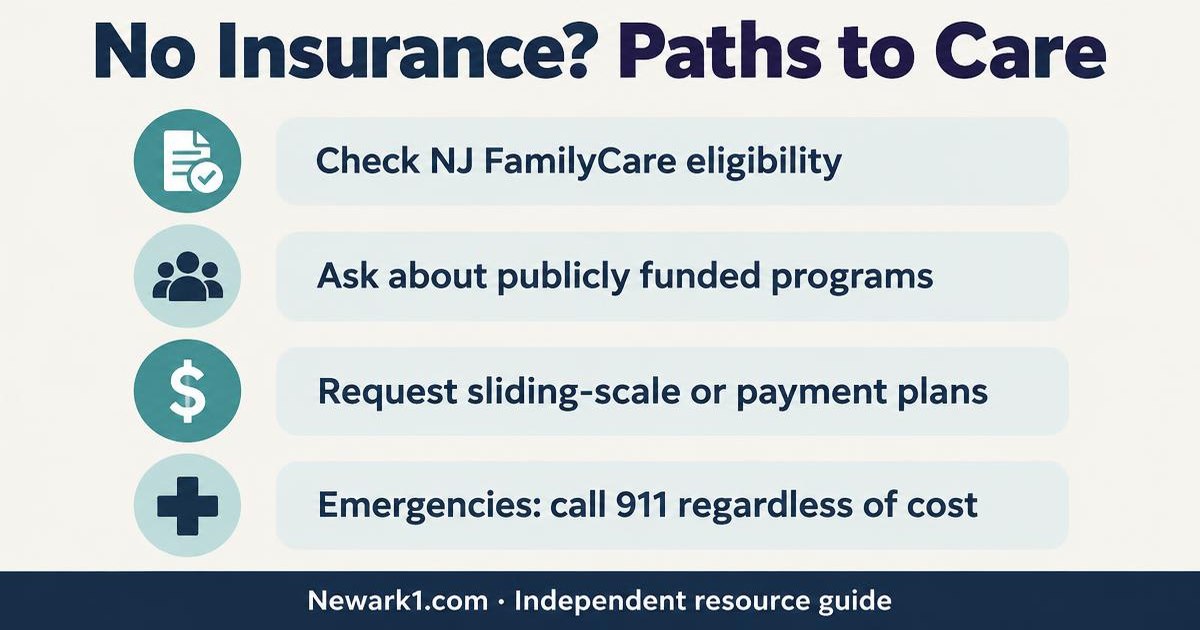
No insurance? Paths to care
- Check NJ FamilyCare eligibility.
- Ask about publicly funded programs.
- Request sliding-scale or payment plans.
- Emergencies: call 911 regardless of cost.
State-funded treatment through ReachNJ
New Jersey funds addiction treatment for eligible residents who are uninsured or underinsured. ReachNJ (1-844-732-2465) is the state’s 24-hour addiction line and can explain how to be assessed and referred to publicly funded care. Eligibility and wait times vary.
Community health centers and sliding fees
Federally funded community health centers charge fees based on income, and many offer behavioral health care or medication for opioid use disorder. Use the federal health center locator to find one, then call to ask which addiction services it provides.
Questions to ask about self-pay
If you will pay directly, ask for an itemized written estimate, refund policy and payment plan options before committing. Ask whether the price changes if your needs change during treatment.
- What is the total estimated cost, itemized in writing?
- Are payment plans or income-based fees available?
- What is refundable if treatment ends early?
- Who bills for medications, labs and medical care?
Be cautious with financing offers
Treatment financing and loans can carry high interest and long-term costs. Read terms carefully, avoid signing financial agreements under pressure and consider asking a trusted person to review documents with you.
Related: what affects rehab costs

Frequently asked questions
Can I get addiction treatment in New Jersey without insurance?
Yes. State-funded programs and income-based options exist for eligible residents. ReachNJ can help you explore them.
Should I apply for NJ FamilyCare before seeking treatment?
If you may be eligible, applying can significantly reduce costs. NJ FamilyCare accepts applications year-round on its official website.
What is ReachNJ?
ReachNJ is New Jersey’s 24-hour addiction line at 1-844-732-2465. Trained counselors can explain treatment options and publicly funded care.
Do community health centers treat addiction?
Many offer behavioral health care or medication for opioid use disorder, with fees based on income. Call the center to confirm services.
What if I need help right now and cannot pay?
Call 911 in an emergency. For non-emergencies, ReachNJ can help you explore publicly funded options.
Sources & further reading
How this page was researched: drafted from the official sources listed above and checked against them. Read our editorial and sourcing approach.
Newark1.com is an independent informational resource, not a treatment center, detox, hospital, emergency service, or government agency. Information is educational and is not medical or legal advice.