
Key takeaways
Most health plans cover addiction treatment, and federal and New Jersey parity laws require comparable coverage to medical care for many plans. Your exact benefits still depend on network, authorization and plan type. Call your insurer first, keep written notes, and appeal in writing if care is denied.

Insurance often covers addiction treatment
The federal Mental Health Parity and Addiction Equity Act generally requires many health plans that cover substance use care to do so comparably to medical care. New Jersey has its own parity laws for state-regulated plans. What your specific plan covers still depends on its network, benefits and authorization rules. Never assume coverage—verify it.
Verify your benefits step by step
Call the member services number on your insurance card and ask about substance use disorder benefits. Then ask the program to verify your coverage too. Keep notes of names, dates and reference numbers from every call.
- Is this program in network for my exact plan?
- Does this level of care need prior authorization?
- What are my deductible, copay and coinsurance?
- Are medications and medical services billed separately?
- How many days or sessions are approved at first, and how are extensions reviewed?
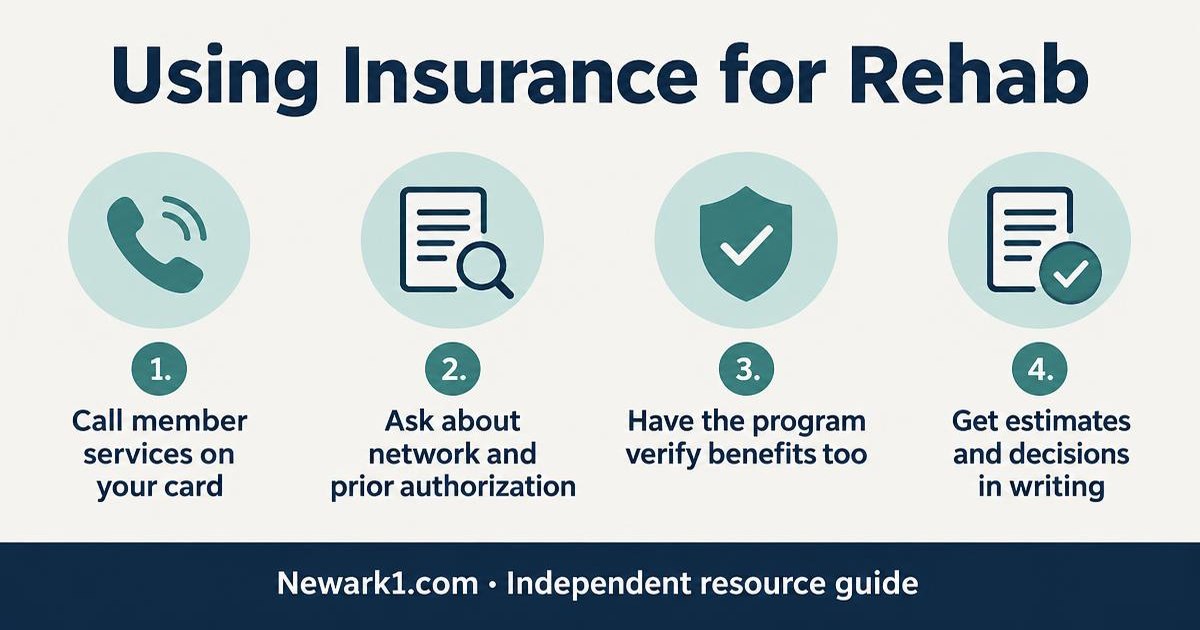
Using insurance for rehab
- Call member services on your card.
- Ask about network and prior authorization.
- Have the program verify benefits too.
- Get estimates and decisions in writing.
In network vs. out of network
In-network programs have negotiated rates with your plan and usually cost you less. Out-of-network care can mean much higher out-of-pocket costs or no coverage at all. Confirm network status with your insurer, not only with the program.
Know your plan type
Your appeal rights depend on how your plan is set up. Fully insured plans issued in New Jersey follow state appeal rules overseen by the NJ Department of Banking and Insurance. Self-funded employer plans usually follow federal rules instead. Your insurance card or employer can tell you which applies.
If coverage is denied
Ask for the denial reason in writing, file an internal appeal with your plan and keep records of every interaction. For fully insured New Jersey plans, the Department of Banking and Insurance publishes a consumer appeal guide explaining internal and external appeals. Ask the program about other options while an appeal is pending.
Related: options if you are paying without insurance

Frequently asked questions
Does my insurance have to cover addiction treatment?
Many plans cover substance use disorder care, often under federal and New Jersey parity rules, but your exact benefits depend on your plan. Verify coverage with your insurer directly.
Is a benefits check the same as approved coverage?
No. A verification of benefits is an estimate of coverage, not a guarantee of payment. Final decisions depend on plan rules and the services delivered.
What is prior authorization?
It is approval your plan requires before certain care, often for detox, residential or day programs. Ask the plan and program whether it applies.
What if my plan denies a higher level of care?
Ask for the reason in writing and file an appeal. A clinician can also discuss whether other levels of care are appropriate.
Who can help me with an appeal in New Jersey?
For fully insured New Jersey plans, the Department of Banking and Insurance explains internal and external appeals in its consumer guide.
Sources & further reading
How this page was researched: drafted from the official sources listed above and checked against them. Read our editorial and sourcing approach.
Newark1.com is an independent informational resource, not a treatment center, detox, hospital, emergency service, or government agency. Information is educational and is not medical or legal advice.